What is compost and why is it so important today?
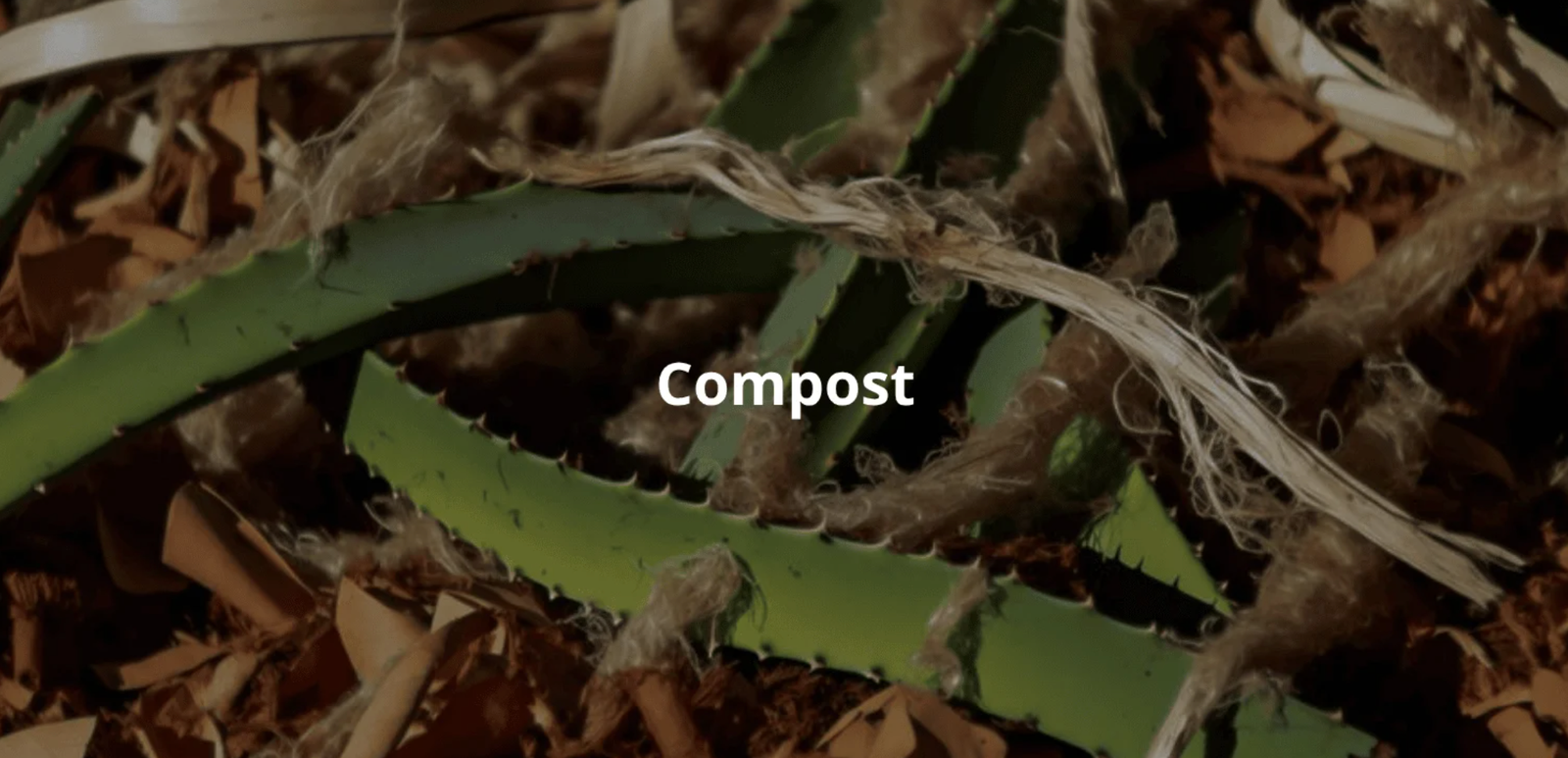
Compost is the result of a natural process of organic matter decomposition. Plant residues, agro-industrial waste, and organic byproducts are transformed, through the action of microorganisms, into a stable material that is rich in nutrients and beneficial for the soil.
More than a fertilizer, compost is a soil regenerator. Its importance has grown in recent years due to the need to adopt more responsible and sustainable agricultural practices. In a context where agricultural soils face degradation, loss of organic matter, and erosion, compost represents a natural and circular solution.
In Mexico, particularly in agave-producing regions such as Jalisco, the proper management of agro-industrial waste has become both a challenge and an opportunity. The valorization of these residues through composting processes makes it possible to close productive cycles and reduce environmental impact.
The composting process: science and nature working together
Composting is an aerobic biological process, meaning it requires oxygen for microorganisms such as bacteria and fungi to break down organic matter and transform it into humus, a stable material rich in nutrients.
At SUE Tequilana, this process is carried out under a controlled scheme that guarantees quality and safety. Everything begins with the collection and conditioning of bagasse and other organic agave residues, adjusting the carbon-to-nitrogen ratio to ensure efficient decomposition.
The material is arranged in piles where key factors such as temperature, humidity, and oxygenation are constantly monitored. In the first phase, microorganisms degrade the simplest compounds; afterward, the temperature rises naturally due to intense biological activity, reaching levels that allow the elimination of pathogens and unwanted seeds.
Through scheduled turning, proper aeration is maintained and anaerobic decomposition is prevented. Finally, the compost goes through a maturation stage, where it stabilizes and develops its final agronomic properties.
When the process is complete, the compost has a homogeneous texture, dark color, and an earthy smell. It is not simply transformed organic matter: it is an agricultural input with technical value, the result of a responsible process that allows SUE Tequilana to convert agave residues into sustainable soil solutions.
compost and the circular economy in the agave industry
The agave industry generates large volumes of organic byproducts. Among them are bagasse and vinasse, derived from the production of traditional beverages such as tequila. Historically, these residues represented a significant environmental challenge.
However, today they are part of a more responsible model. In Tequila production, agave bagasse can be converted into raw material for composting, transforming waste into a resource.
This approach aligns with the principles of the circular economy: reduce, reuse, and recycle. Instead of considering byproducts as waste, they are reintegrated into the production cycle, adding value to the agricultural sector.
At SUE Tequilana, this vision is a core part of its environmental commitment. The transformation of organic residues from agave into high-quality compost not only reduces impacts but also directly contributes to soil regeneration.
Benefits of compost in agriculture
Compost provides multiple benefits that go beyond plant nutrition.
First, it improves soil structure. Soils treated with compost have greater water retention capacity, better aeration, and less compaction. This is especially relevant in agricultural areas where intensive use has deteriorated soil quality.
In addition, compost increases soil biological activity. Beneficial microorganisms find a favorable environment in it, strengthening natural balance and improving nutrient availability.
Another key benefit is the reduction in dependence on chemical fertilizers. While it does not completely replace them in all cases, compost helps reduce their use, lowering costs and minimizing environmental impacts.
In agave crops and other agricultural products, the consistent use of compost helps improve soil resilience against droughts and climate variability.
Compost as a tool for environmental regeneration
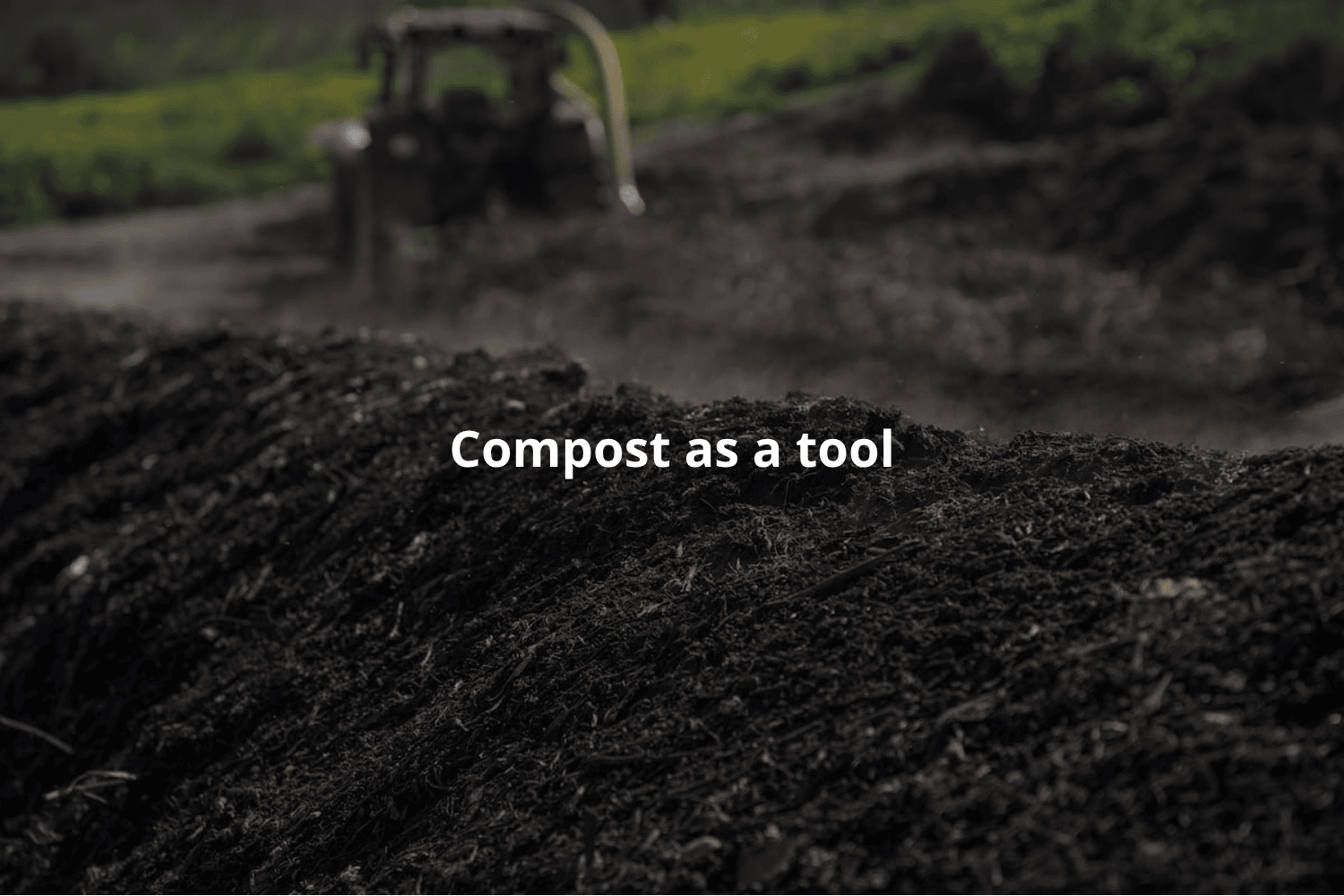
Talking about compost is talking about regeneration. It is not only about fertilizing, but about giving life back to the soil.
Degraded soils lose organic matter over time. Without it, their productive capacity and stability decrease. Compost restores that organic matter, promoting natural processes that strengthen the agricultural ecosystem.
In addition, composting helps reduce greenhouse gas emissions. When organic waste is improperly disposed of, it can generate methane, a gas with high global warming potential. In contrast, when composted in a controlled manner, these residues are stabilized and reintegrated into the soil.
This model benefits not only agricultural producers, but also communities and the environment as a whole.
Agave-derived compost: sustainable innovation
Compost made from agave residues has particular characteristics that make it especially valuable. The fiber from the bagasse provides structure, while other organic components enrich the nutritional profile of the final product.
In production regions linked to the Tequila value chain, the development of solutions such as compost allows the industry to evolve toward more responsible practices.
SUE Tequilana promotes this model through controlled processes that guarantee the quality, stability, and safety of the compost. It is not only about managing waste, but about developing a reliable agricultural input aligned with environmental standards.
This integration between industry and agriculture creates a virtuous cycle: agave is cultivated, transformed, and its byproducts return to the soil to nourish new crops.
Difference between compost and traditional fertilizers
It is common to confuse compost with chemical fertilizers, but their function is different.
Traditional fertilizers provide specific nutrients in determined concentrations. Their effect is usually fast, but they do not necessarily improve soil structure or biology.
Compost, on the other hand, acts in an integral way. Its nutrient release is gradual, it improves water retention capacity, and promotes microbial biodiversity. It is a long-term solution that strengthens the agricultural system as a whole.
For this reason, many producers combine both approaches, using compost as the structural base of the soil and adjusting nutrition according to crop needs.
The future of compost in Mexico
Mexico faces the challenge of transitioning toward more sustainable agriculture. Pressure on natural resources, climate variability, and the need to maintain productivity make it essential to adopt regenerative practices.
Compost represents one of the most accessible and effective tools to achieve this. In states such as Jalisco, where the agave industry plays a strategic role, the valorization of waste through composting can become a model that can be replicated in other production chains.
Companies committed to sustainability, such as SUE Tequilana, demonstrate that it is possible to transform an environmental challenge into an opportunity for innovation and responsible growth.
Compost is not simply decomposed organic matter. It is a concrete solution to regenerate soils, reduce environmental impacts, and strengthen the agriculture of the future.
In the context of the agave industry, compost takes on an even more relevant dimension: it turns waste into resources and promotes a circular economy model that benefits producers, companies, and the environment.
Betting on compost is betting on soil health, sustainability, and a more balanced agricultural system. At SUE Tequilana, this commitment is translated into concrete actions that transform the way we understand waste and its potential.